Back-to-school season in the Lowcountry means supply lists, sports physicals, and — somewhere on the form — a school vision screening. It’s easy to see that checkmark and cross “eyes” off the list. But a screening and a comprehensive eye exam are two very different things, and knowing the difference is one of the most useful things a Summerville parent can do before the first bell rings.
Does my child need an eye exam if they passed the school screening? Yes — a passed screening does not mean healthy eyes. School screenings usually check only distance vision and can miss focusing, eye-teaming, and eye-health problems. The American Optometric Association notes that even good screening tools can miss roughly one-third of children with an eye or vision disorder. A comprehensive exam at Jackson Davenport Vision Center in Summerville checks the whole picture.
What a School Vision Screening Actually Tests — and What It Misses
A school vision screening is a quick, low-cost public-health tool. Its job is to flag children who might have a problem so they can be sent for a real evaluation. That’s valuable — but it’s limited by design, and it’s not the same as an exam.
Most screenings check only distance visual acuity: how well your child can read a chart of letters from about 20 feet away. That single measurement is where “20/20” comes from. A screening can flag a possible need for further evaluation, but it cannot diagnose an eye disease, and passing one does not mean the eyes are healthy. According to the American Optometric Association (aoa.org), even the most sophisticated screening tools — used by well-trained screeners — miss roughly one-third of children with an eye or vision disorder.
Here’s the catch: a child can read the 20-foot chart perfectly and still struggle. Reading a book at 12 inches, keeping both eyes working together, and focusing back and forth from board to desk all take skills a distance-only screening never touches. Because children assume everyone sees the way they do, they rarely say anything is wrong — they just get tired, lose their place, or avoid the work.
Problems a basic screening commonly misses include:
- Farsightedness (hyperopia), astigmatism, and other refractive errors — which can cause blur or strain that a distance-only screening may not fully reveal.
- Eye-teaming and focusing problems — trouble getting the two eyes to work together comfortably up close, which matters for reading.
- Amblyopia (“lazy eye”) — reduced vision in one eye that can hide behind a strong other eye, so the child still “passes.”
- Strabismus — an eye that turns in or out, which can affect depth perception.
A vision screening is a smart first filter. It is not a substitute for an exam. If you want to know your child’s eyes are actually healthy, the answer is a comprehensive eye exam.
What a Comprehensive Eye Exam Checks Instead
A comprehensive eye exam evaluates both how well your child sees and the health of the eyes — and it can reveal problems that have no symptoms yet. That’s the whole point of the difference.
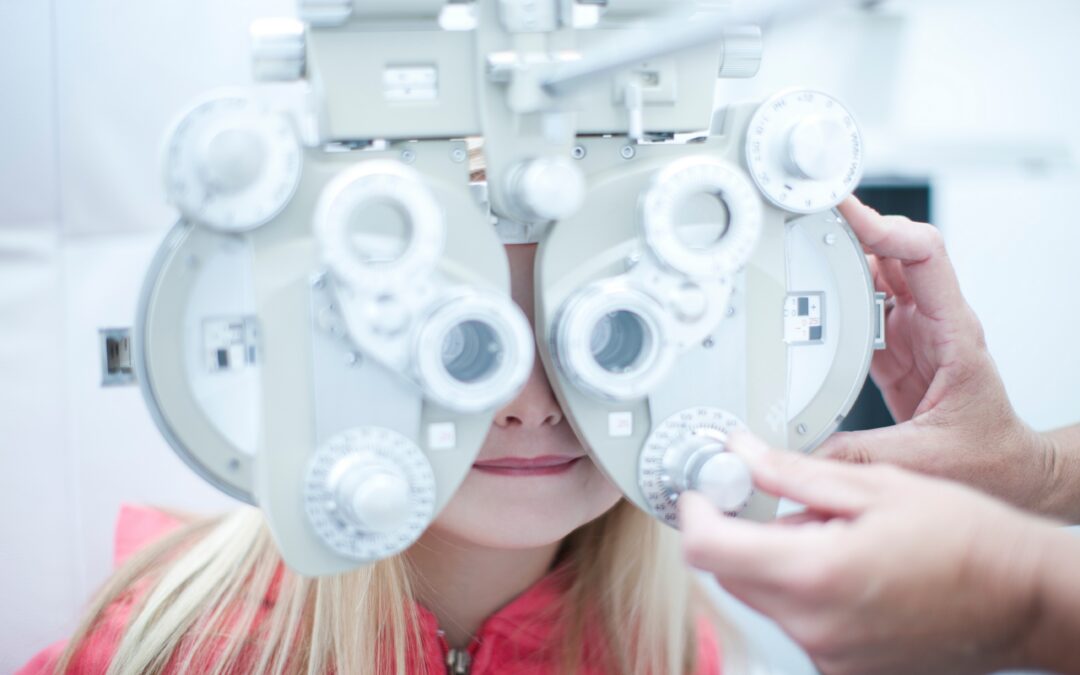
During a comprehensive exam, your eye doctor typically reviews your child’s health and family history and then performs several tests, which may include:
- Visual acuity at distance and near — not just the 20-foot chart.
- Refraction — pinning down the exact prescription, if any is needed.
- Eye-movement and eye-teaming testing — checking that the eyes work together.
- A slit-lamp exam of the front of the eye and a look at the back of the eye (with dilating drops as needed) to check eye health.
- Eye-pressure and other screening for eye disease, as indicated.
Because the doctor can view the blood vessels and optic nerve at the back of the eye, a comprehensive exam can even surface early signs of broader health issues. It’s a thorough look — the kind a screening was never meant to be. You can see what a full evaluation involves on our eye exams page.
The AOA Pediatric Exam Schedule — Including InfantSEE
How often should a child actually see the eye doctor? The two leading national bodies answer this differently, and it’s important to keep them separate rather than blend them into one “average” rule.
The American Optometric Association (AOA) recommends a schedule of comprehensive exams for children:
- First exam at 6 to 12 months of age. The AOA’s InfantSEE program (infantsee.aoa.org) provides a no-cost comprehensive eye and vision assessment for babies 6–12 months old, regardless of a family’s income or insurance.
- An exam at age 3 and again at age 5, before starting kindergarten.
- Annually through the school years, to keep up with changing prescriptions like myopia and to support comfortable reading and learning.
The American Academy of Ophthalmology (AAO) takes a different, screening-based approach for children who show no symptoms: it relies on vision screenings at routine well-child checkups and refers a child for a full eye exam if a screening flags a problem, or if there’s a family history of childhood eye disease or another risk factor.
These are genuinely different philosophies, and both are legitimate. The AOA leans toward regular comprehensive exams for every child; the AAO leans on screenings first. Whichever standard you choose, the practical takeaway is the same: a school screening alone isn’t the finish line, and how often your child should be seen depends on their age, history, and risk — something your eye doctor can help you set.
Warning Signs Between Exams — Reasons to Book, Not to Diagnose
Kids grow fast, and their visual demands change with them. Even on a regular exam schedule, it helps to know the behaviors that are worth an appointment. Think of these as reasons to book a children’s eye exam — never a checklist to diagnose your child at home.
Watch for:
- Squinting, or holding books and screens very close.
- Sitting unusually close to the TV or the classroom board.
- Frequent eye rubbing or head tilting.
- Losing their place when reading, or avoiding reading and other near work.
- One eye turning in or out, even now and then.
- Headaches, tired eyes, or complaints after screen time.
A quick word on screens, since it comes up every year: the discomfort kids feel from long device sessions comes from reduced blinking and focusing fatigue — not from “blue light” damaging the eyes. The American Academy of Ophthalmology (aao.org) states there is no scientific evidence that blue light from screens harms the eyes, and it does not recommend blue-light-blocking glasses for eye protection. The simple, evidence-based habit is the 20-20-20 rule: every 20 minutes, look at something at least 20 feet away for at least 20 seconds.
Finally, a few symptoms call for prompt or emergency care rather than a routine visit. If a child has a sudden loss of vision, a sudden burst of new flashes or floaters, or describes a “curtain” or shadow across their vision, contact an eye doctor right away or seek emergency care.
Childhood Myopia — Why Catching It Early Matters
Another reason regular exams matter: childhood myopia (nearsightedness) is an important vision change eye doctors watch for in school-age kids. In myopia, the eyeball grows a little too long from front to back, so distant objects look blurry while near vision stays clear. It usually begins in childhood and tends to progress as a child grows.
Because myopia often starts young and can keep progressing through the school years, catching it early — and keeping up with regular exams — gives your eye doctor the best chance to track it and talk through options with you.
The encouraging part is that eye doctors now have evidence-based myopia management options — and it’s important to be clear-eyed about what they do. Myopia management slows the progression of nearsightedness; it does not cure or reverse it. Provider-directed approaches your eye doctor may discuss include low-dose atropine eye drops, overnight orthokeratology (specially fitted contact lenses that reshape the cornea while your child sleeps), and specially designed soft multifocal contact lenses. Spending more time outdoors — research points to roughly 60 to 80+ minutes a day — is also associated with a lower risk of myopia developing and progressing.
Whether any of these is right for a child depends entirely on their prescription, eye health, and lifestyle — that’s a conversation with your eye doctor, not a do-it-yourself decision. If contact-lens options come up, you can learn more about how we handle fittings on our contact lenses in Summerville page.
Frequently Asked Questions
My child passed the school screening — do they still need an eye exam? Yes. A screening usually checks only distance vision and can miss focusing, eye-teaming, and eye-health problems; the AOA notes that even good screening tools can miss roughly one-third of children with an eye or vision disorder. Passing a screening doesn’t confirm the eyes are healthy — a comprehensive exam does the full evaluation.
How often should my school-age child have an eye exam? The AOA recommends a first exam at 6–12 months, an exam at age 3 and again at age 5 before kindergarten, and then annually through the school years. The AAO instead recommends routine screenings, with a full exam if a screening flags a problem or there’s a risk factor. How often is right for your child depends on their age, history, and risk — your eye doctor can set the schedule.
Do blue-light glasses protect my child’s eyes from screens? According to the AAO, there’s no scientific evidence that blue light from screens damages the eyes, and blue-light-blocking glasses aren’t recommended for eye protection. Screen discomfort comes from reduced blinking and focusing fatigue — the 20-20-20 rule helps.
Can myopia be cured? No. Myopia management can slow how quickly nearsightedness progresses in some children, but it does not cure or reverse it. Your eye doctor can explain whether any management option fits your child.
Schedule Your Family’s Back-to-School Eye Exam in Summerville
July and August are the ideal window to get ahead of the school year — before homework, whiteboards, and long screen sessions put your child’s eyes to the test. If your child passed a screening but hasn’t had a full exam, or if you’ve noticed any of the signs above, a comprehensive eye exam is the next step.
Jackson Davenport Vision Center has cared for Lowcountry families since 1968 as a third-generation, family-owned practice, serving Summerville, Goose Creek, and the greater Charleston area from 218 Old Trolley Road. To book a comprehensive children’s eye exam, call (843) 871-9750 or reach us through our contact page. You can learn more about our story on our about us page.
This article is general information, not medical advice, and is not a substitute for an exam by a licensed eye doctor. Your child’s eyes and situation are unique — if you have a vision or eye-health concern, please schedule a comprehensive eye exam.